The Life & Miracles of St Francis of Assisi
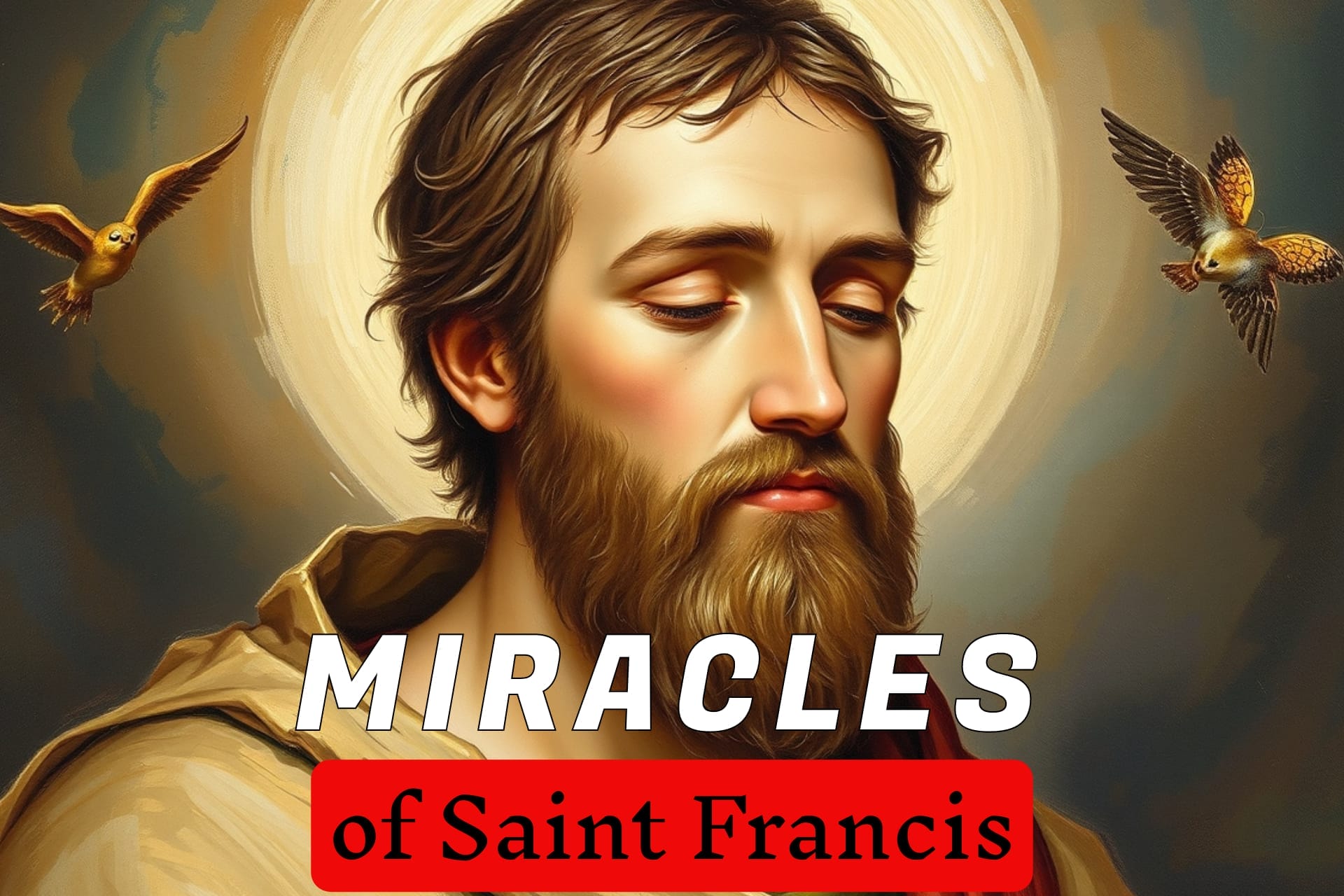
Welcome to a journey through the life of one of the most venerated figures in Christian history, Saint Francis of Assisi. In a world obsessed with wealth and power, one man abandoned everything to embrace poverty, preach to animals, and perform miracles that defied reason. This is the story of St. Francis of Assisi—the saint who changed Christianity forever.
Born into a life of luxury as the son of a wealthy merchant, Francis underwent a profound transformation that led him from a settled life of comfort to a beloved saint who inspired millions, his journey is both extraordinary and deeply moving. Today, we will explore his extraordinary journey of faith and service, highlighting the pivotal moments that shaped his life and continue to inspire millions around the globe.

So, let us set the stage for this incredible narrative, exploring major aspects of his life: from his conversion and embracing of poverty, through his compassionate ministry, to his miraculous rapport with nature and his enduring legacy.
Early Life and Conversion
In Eleven Hundred & Eighty One, in the bustling town of Assisi, Italy, Francis was born to Pietro Bernardone, a prosperous cloth merchant. As a young man, Francis enjoyed the privileges of wealth and aspired to earn glory on the battlefield. However, his life took a dramatic turn following his capture during a skirmish with the neighboring city of Perugia, leading to a year-long imprisonment that broke his health and spirit.

During this period of suffering and reflection, Francis experienced his first divine vision. It was a call that would change his course forever—Christ’s voice urging him to “rebuild the church.” Misinterpreting this initially as a literal command, Francis began by restoring ruined chapels around Assisi.

His most famous vision occurred in the dilapidated chapel of San Damiano. There, he heard Christ instruct him more clearly: “True glory lies not in battle but in serving others.” This pivotal moment convinced Francis that his calling was not to rebuild structures but to reform spiritual lives—including his own.
Spiritual Journey and Ministry
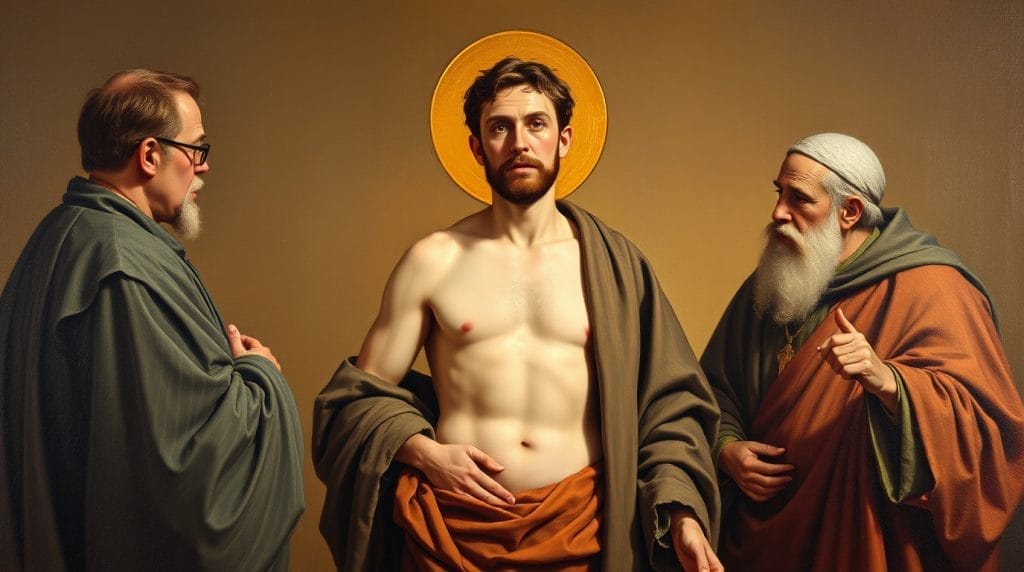
The real test of Francis’ newfound conviction came when he renounced his inheritance and worldly possessions before Bishop Guido of Assisi. In a dramatic gesture, he stripped off his fine garments, handed them to his father, and walked away naked; embraced by the bishop who cloaked him in a simple robe. This act symbolized Francis’ complete devotion to poverty and marked the beginning of his ministerial life.
He started literally rebuilding the church at San Damiano, stone by stone, surviving on alms. By twelve hundred and nine, his humble example had attracted a following, leading to the founding of the Order of Friars Minor. This fraternity was based on principles of poverty, humility, and fraternal love—a radical departure from the religious practices of the time.


Growth of the Franciscan Movement
Francis’ message resonated deeply in an era marked by opulence within the church and widespread poverty among its congregants. His commitment to living like Christ—embracing lepers, serving the poor—drew men and women alike to his side.
One such follower was Saint Clare, a young noblewoman moved by Francis’ teachings. Under his guidance, she founded the Order of Poor Clares, extending Francis’ vision with her own community devoted to austerity and prayer.

The Franciscan order expanded rapidly across Europe, its friars preaching in everyday language and living among those they served—much like Jesus did.
Miraculous Connection with Animals
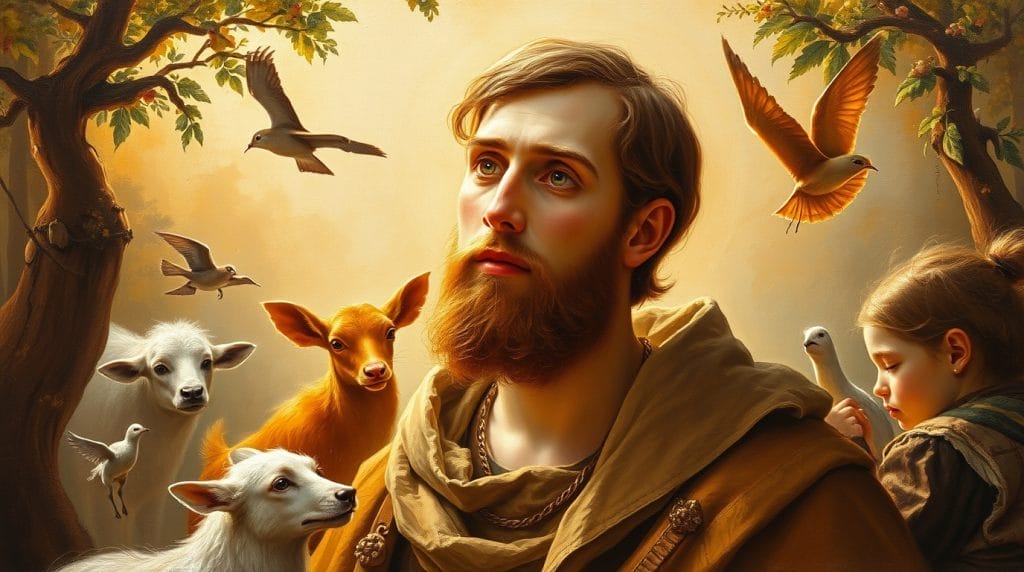
Perhaps nothing illustrates Francis’ revolutionary approach to faith more than his miraculous interactions with animals.
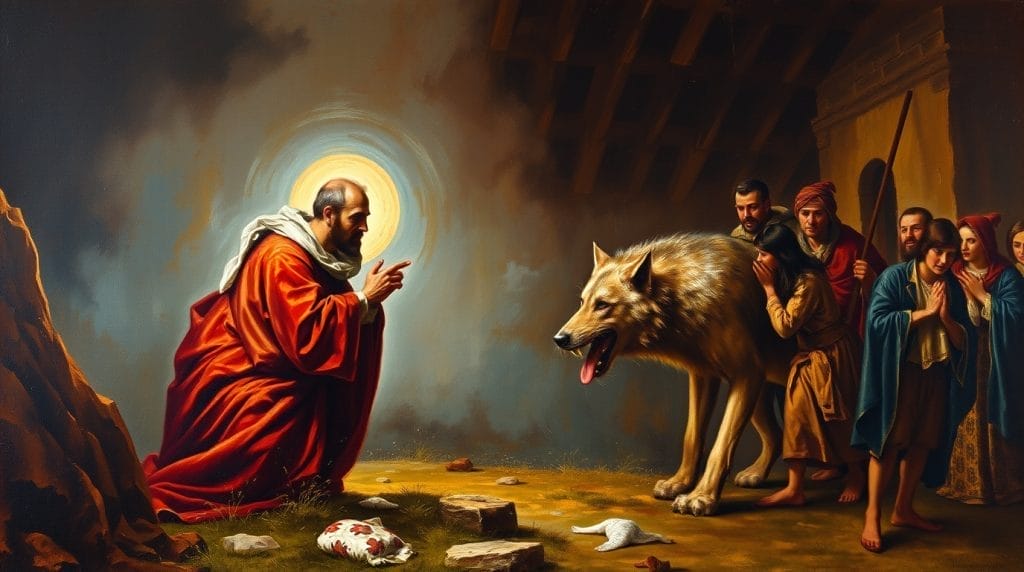
Perhaps one of the most famous stories is that involving the fierce Wolf of Gubbio, a terrifying creature terrorizing villagers until they sought help from Francis himself. Fearlessly approaching this fearsome beast armed only with faith—and perhaps some bread—Francis spoke gently yet firmly: “Brother Wolf,” he said calmly yet authoritatively; “I ask you on behalf God’s name: cease harming these people.” Miraculously pacified by these words alone (and maybe some bread), peace was forged between wolf & townspeople alike—demonstrating harmony possible even amidst fearsome adversaries when guided by grace & understanding rather than violence alone.
Sermon to the Birds
Another cherished account tells how while traveling through countryside fields one day surrounded by birds alighting nearby trees, all chirping melodiously around him, Francis paused momentarily before addressing them directly: “My brothers & sisters,” he declared warmly; “let us give thanks together unto God who created us all!” As if hearing every word spoken aloud (and perhaps comprehending too), those feathered friends reportedly gathered closer still, listening attentively throughout entire sermon delivered amongst their midst!
Miraculous Events and Teaching
In 1224, two years before his death, Francis received another divine sign—the Stigmata, making him the first recorded person in Christian history to bear physical marks resembling those of Christ’s crucifixion. This phenomenon occurred after a vision where he saw a seraphic angel bearing these wounds. These marks were seen as proof of his sanctity and deep identification with Christ’s suffering.
Francis also performed numerous healing miracles—curing lepers and blessing sick individuals such as Bartholomew from Narni whose demonic possession was healed by Francis’ prayer.

Key Teachings and Philosophy
At heart, Francis taught by example. He emphasized poverty as a means not just of personal purification but as a way to solidarity with the marginalized. His approach towards nature was equally revolutionary—viewing animals not as mere beasts but as part of God’s creation deserving respect and kindness.
Above all else, he advocated for an imitation of Christ’s humanity—a message encapsulated in works like “The Canticle of Creatures,” where he praises God through elements like Brother Sun and Sister Moon.
Legacy and Impact
Francis’ influence extended far beyond medieval Christianity; he inspired countless followers through centuries including leaders like Pope Francis, who chose his papal name in honour of Saint Francis due to their shared values concerning poverty and environmental stewardship.
Today, Saint Francis is revered not only as the patron saint of animals and ecology but also as a champion for peace and interfaith dialogue—an enduring legacy that transcends religious boundaries.
Legacy and Impact
His life’s work continues through entities like the Franciscan Order which plays an active role in global issues such as poverty alleviation and ecological advocacy. His simple yet profound teachings hold particular resonance today amidst global crises that challenge us to live responsibly on Earth while caring for its most vulnerable inhabitants.
Throughout this exploration into Saint Francis’ transformative journey from wealth to profound spiritual enlightenment, we witness an enduring message of simplicity and love—a call that echoes through time urging us all towards greater compassion and humility.
As we face contemporary challenges—environmental degradation, social inequality—it is worth reflecting on how Saint Francis’ example might inspire solutions grounded in respect for nature and humanity alike.
Let us carry forward this legacy into our lives today; let us choose paths guided by love over possession, service over dominion—a truly fitting tribute to Saint Francis’ remarkable spirit.
Thank you for joining Miracula Sanctorum on this enlightening journey into one man’s mission that revolutionized an era—and continues inspiring hearts today.